
The FRONTIER Clinical Research Group is Australia’s largest specialist team focused on frontotemporal dementia (FTD). Since 2007, we have conducted research that has helped improve the diagnosis, prognosis, and support of individuals living with FTD. Our research covers cognition, speech and language, behaviour, social functioning, neuroimaging, genetics, clinical management, and other key aspects of FTD and dementia more broadly. We work with individuals diagnosed with FTD and related conditions, such as corticobasal syndrome (CBS) and progressive supranuclear palsy (PSP), as well as with those living with Alzheimer’s disease (AD), primary progressive aphasia (PPA), or posterior cortical atrophy (PCA).
We also work closely with carers and families, helping to clarify the diagnosis and understand the changes that occur over time. We provide practical guidance, connect families with specialised services, and offer ongoing support throughout the FTD journey.
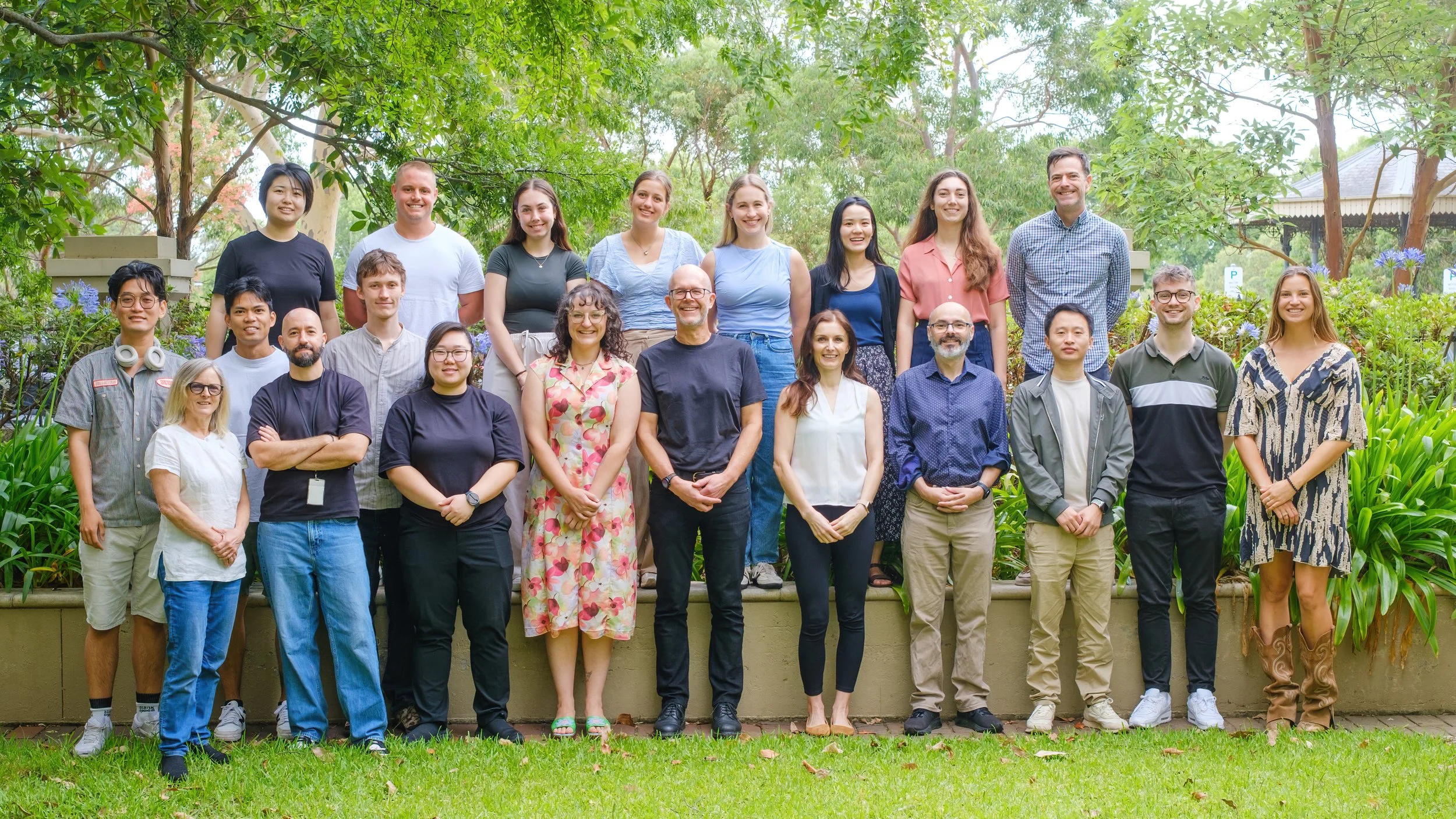
FRONTIER is led by Professor Olivier Piguet and includes approximately 20 researchers, clinicians, students, and administrative staff. Our research is supported by the National Health and Medical Research Council, university funding, and generous community donations. The FRONTIER research clinic is based at the Brain and Mind Centre, University of Sydney.
Click below to keep up with our social media platforms where we post updates on papers, events and connect with our community.
Welcome to FRONTIER
Annoucements
-
On Wednesday 30th September 2026, we will be holding the FRONTIER Carer Information Day. Join us to hear updates of the latest findings from FRONTIER's research in FTD with some key services in the space of carer wellbeing and dementia care, and interesting talks.
Register for in-person or online attendance: https://bit.ly/FRONTIERCarerInfoDay2026
-
Curious about what FRONTIER does? Our new video breaks it down.
Hear from Prof Olivier Piguet on how our clinic and research programs come together to advance the field.
YouTube link: https://youtu.be/JRYACI0kBP0?si=qRH7nF5w_a0PIDse
Featured Collaborations
On our YouTube channel, we feature a series of videos showcasing our diverse collaborations that are advancing dementia research and care in Australia. Whether you're a researcher, a carer, or simply looking to better understand dementia, these stories highlight the real-world impact of our collaborations in improving knowledge, support, and outcomes for people living with dementia.
Latest Publications
-
Modeling contributions of cognition and apathy to functional impairment in younger-onset dementia
Alzheimers Dement (Amst). 2026 Jan 20;18(1):e70249. doi: 10.1002/dad2.70249.
PMID: 41573421; PMCID: PMC12819045.
Warren SL, Ahmed RM, Piguet O, Foxe D, Irish M.Last updated: February 18th 2026.
-
Social cognition in the nonfluent and logopenic variants of primary progressive aphasia: A review of variant-specific profiles
Cortex. 2025 Dec;193:171-190. doi: 10.1016/j.cortex.2025.10.007. Epub 2025 Nov 5. PMID: 41259904.
Cordonier N, Piguet O.
Last updated: February 18th 2026.
-
Cognitive-linguistic skills in production of expository discourse: Insights from longitudinal changes and neural correlates in primary progressive aphasia
Cortex. 2026 Jan;194:121-142. doi: 10.1016/j.cortex.2025.11.011. Epub 2025 Dec 1. PMID: 41391212.
Anwia MA, Lowe MS, Matis S, Carrick J, Piguet O, Landin-Romero R, Ballard KJ.Last updated: February 18th 2026.
-
Glial and neuronal cell-free DNA in plasma of sporadic bvFTD and late onset primary psychiatric disease patients
Sci Rep. 2025 Nov 6;15(1):38844. doi: 10.1038/s41598-025-22667-y. PMID: 41198751; PMCID: PMC12592525.
Chatterton Z, de Boer SCM, Riedl L, Matis S, Fenoglio C, Rue I, Landin-Romero R, Southwood D, Galimberti D, Arighi A, Diehl-Schmid J, Ducharme S, Pijnenburg YAL, Piguet O, Halliday G.Last updated: February 18th 2026.
-
Interpreting Addenbrooke's Cognitive Examination-III Scores in Dementia: Performance Distributions and Clinically Meaningful Change
Eur J Neurol. 2025 Jul;32(7):e70257. doi: 10.1111/ene.70257.
Carrick J, Cheung SC, Foxe D, Piguet O.
This publication offers practical reference ranges and meaningful yearly change thresholds for the ACE-III cognitive test, helping clinicians better track dementia progression.
Last updated: September 5th 2025.
-
Development of the Flexibility in Daily Life scale to measure multidimensional cognitive and behavioural flexibility in health and disease
Br J Clin Psychol. 2025 Jun;64(2):315-329. doi: 10.1111/bjc.12505.Epub 2024 Sep 22.
Horne K, Chen T, Irish M.
This publication introduces and validates the new Flexibility in Daily Life (FIDL) questionnaire, showing it reliably measures thinking and behavior flexibility across different ages.Last updated: September 5th 2025.
-
Differentiating sporadic frontotemporal dementia from late-onset primary psychiatric disorders
Brain Commun. 2025 May 22;7(3):fcaf199. doi: 10.1093/braincomms/fcaf199.eCollection 2025.
de Boer SCM, Riedl L, Braak S, Fenoglio C, Foxe D, et al.This publication demonstrates that cognitive screening, letter fluency, and attention assessments are effective tools for differentiating behavioural variant frontotemporal dementia from late-onset primary psychiatric disorders.
Last updated: September 5th 2025.
Support Us
FRONTIER is funded by government grants and donations from people like you. With your support, we can continue to make a real difference in the lives of people living with FTD.
Contact Us
Fill out the form contact form, and we'll get back to you as soon as possible.